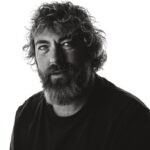
An actor’s headshot has one job.
It needs to make somebody want to see more of you.
Not because you’ve been made to look younger, smoother or more glamorous than you really are. Not because the lighting is dramatic or the retouching is clever.
Because the photograph gives a casting director a clear, believable sense of who you are and where you might fit.
The best actor headshots look like you on a very good day. They feel honest, current and full of possibility.
Here’s what makes that happen.
1 – It actually looks like you
This sounds obvious. It isn’t always.
If you walk into an audition and the person in the room struggles to connect you with the photograph they selected, your headshot hasn’t done its job.
That means it needs to reflect how you look now. Your current hair, age, facial hair and general appearance. Not how you looked three years ago, before a new hairstyle or after an unusually flattering holiday photograph.
A headshot isn’t there to preserve your favourite version of yourself.
It’s there to introduce the person who will walk into the room.
2 – Your eyes need to hold attention
People often talk about actor headshots being all about the eyes. It sounds like a cliché, but there’s a reason it keeps being said.
Your eyes are where much of the photograph’s energy sits.
That doesn’t mean staring aggressively into the lens or trying to look intense. It means being mentally present. You need to be thinking something, responding to something or connecting with the person behind the camera.
A technically perfect photograph can still feel empty if there’s nothing happening behind the expression.
I’ll often keep talking while I photograph, ask questions or give you a small thought to work with. The aim isn’t to manufacture an emotion. It’s to stop the face from becoming a mask.
3 – The expression suggests a story
A broad smile can be useful, but it shouldn’t be the only thing in your gallery.
Casting directors need clues.
A slight shift in the mouth, eyes or brow can move a photograph from warm and approachable to guarded, intelligent, vulnerable, comic or quietly dangerous.
These differences should be subtle. An actor’s headshot isn’t a collection of exaggerated characters. You don’t need to demonstrate your full emotional range in a single frame.
The photograph should leave room for imagination.
It gives enough information to suggest where you might fit without reducing you to a single fixed role.
4 – The lighting supports you rather than showing off
Good lighting shapes the face, brings attention to the eyes and creates the right atmosphere.
It shouldn’t become the main subject.
Some actors suit soft, open light that feels natural and approachable. Others benefit from more shadow and contrast. Often we’ll create both during the same session, giving you options for different roles and submissions.
The important thing is that the lighting still feels believable.
A headshot can have personality without looking like a film poster. If the first thing anyone notices is the lighting technique, it may be getting in the way.
5 – Styling gives a casting director useful clues
What you wear matters, but this isn’t about arriving with a suitcase full of costumes.
Simple clothing usually works best. Strong necklines, useful layers and colours that suit your skin and eyes can all help. Large logos, busy patterns and fussy details tend to distract.
Think about your likely casting range rather than dressing as a specific character.
A leather jacket might suggest something different from a soft knit. A shirt can feel more professional or authoritative. A plain T-shirt may leave the photograph more open.
Small changes can shift how you’re read without turning the session into fancy dress.
Bring several sensible options and we can decide what works in front of the camera.
6 – Retouching doesn’t remove the evidence
Actor headshots need to survive the meeting.
Skin can be tidied. Temporary spots, stray hairs and small distractions can be removed. Colour and contrast can be refined.
But lines, texture, freckles and other recognisable features are part of your face.
Heavy retouching might produce a smoother photograph, but it can also remove character and create an expectation you can’t meet in person.
That isn’t helpful to you or the casting director.
The finished photograph should look polished, but still unmistakably like the person who sat in front of my camera.
7 – The final selection reflects your real range
The best-looking photograph isn’t necessarily the most useful headshot.
You might be drawn to the biggest smile or most dramatic lighting. Your agent may see something more valuable in a quieter frame that fits the way the industry is likely to cast you.
This is why selection matters.
A strong set might include warmth, neutrality, confidence and a slightly more serious option. Each photograph should add something different. Ten near-identical expressions aren’t ten useful headshots.
If you have an agent, it’s worth asking what gaps they see in your current portfolio before the shoot. They may want a clearer commercial option, something with more authority or a photograph that better represents the roles you’re now being considered for.
8 -You’re directed, but not over-directed
You shouldn’t need to arrive knowing how to pose.
I’ll guide you through small adjustments to your shoulders, chin, posture and eyeline. These changes help the camera see you clearly, but they shouldn’t make you look arranged.
There’s a balance.
Too little direction can leave an actor feeling exposed and uncertain. Too much can produce photographs that look stiff or controlled.
The best results tend to happen when the technical direction becomes almost invisible and we can concentrate on expression, energy and connection.
Castable doesn’t mean generic
A more castable headshot isn’t one that makes you look like everybody else.
It’s one that helps the right person recognise what’s distinctive about you.
You don’t need to appear suitable for every possible role. That usually produces a safe photograph that says very little. You need an honest set of headshots that shows your strongest qualities, suggests a believable casting range and makes people curious about what else you can do.
Most importantly, you should still look like you when you arrive in the room.
I photograph actors and performers at my Cranleigh studio, creating natural, current headshots with clear direction and minimal retouching.
If your existing photographs no longer look like you, or they aren’t helping you get seen for the right work, get in touch and book your next headshot session.