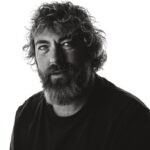
Your headshot might look wonderful when it fills a laptop screen.
The lighting is flattering. Your expression feels natural. There’s plenty of detail in your face, and the background adds just the right amount of character.
Then LinkedIn shrinks it to the size of a postage stamp.
Suddenly, you’re a tiny head floating somewhere near the middle of a circle. Your carefully chosen location has disappeared. Your expression is difficult to read, and half your hair has been cropped off.
Most headshots aren’t viewed large. They appear beside a LinkedIn comment, at the bottom of an email, on a company team page or alongside a speaker biography.
They have very little space and even less time to make an impression.
A good headshot needs to work small.
Your face needs to be easy to see
This sounds obvious, but plenty of profile photographs make the person difficult to identify.
The subject might occupy a tiny part of the frame. They may be standing beneath a tree, leaning against a wall or sitting at the far end of an impressive office.
It could be a lovely portrait. It just isn’t necessarily a useful headshot.
Imagine Helen runs a small marketing agency. Her profile picture shows her standing outside a colourful beach hut. At full size, the photograph feels cheerful and relaxed.
On LinkedIn, most of the image is the beach hut. Helen is barely visible.
People scrolling through their feed aren’t studying the photograph. They glance at it for a fraction of a second. If they can’t quickly see a face and recognise an expression, the picture loses much of its value.
For a profile image, your face should occupy a meaningful amount of the frame.
You can keep the wider portrait for your website.
Tight crops create connection
A close crop brings the viewer nearer to you.
They can see your eyes, understand your expression and get a clearer sense of who you are. That creates a stronger feeling of connection than a distant, full-length photograph.
This is particularly important when the image appears beside something you’ve written.
Your headshot acts as a small visual signature. It tells the reader, “This came from a real person.”
That person should look approachable enough to speak to and credible enough to listen to.
A close crop helps with both.
It also removes distractions. Your office furniture, favourite bookshelf and carefully selected coffee cup may tell a useful story in a wider brand photograph. At thumbnail size, they’re mostly colourful clutter.
Your headshot has one main subject.
You.
Your expression has to read quickly
Subtle expressions can look brilliant in a large portrait.
A tiny movement around the eyes or a slight lift at one corner of the mouth can completely change the mood of an image. But some of that subtlety disappears when the photograph is reduced.
That doesn’t mean you need an enormous grin.
It means your expression needs enough clarity to survive at a small size.
Let’s imagine Tom is an experienced financial adviser. He wants to look calm and capable, so he chooses a very serious photograph for LinkedIn.
When viewed large, his expression looks thoughtful. As a small profile picture, it looks slightly unfriendly.
A second image with a little more warmth around the eyes works better. It still feels professional, but it’s easier to read.
This is why I’ll often take several versions during a headshot session. A broad smile, a quieter smile and a more serious expression may all be useful.
The best choice depends on where the photograph will appear and what you want it to communicate.
Contrast matters more than tiny details
When a photograph is reduced, fine detail disappears.
What remains is the overall shape, colour and contrast of the image.
If your clothes, hair and background are all a similar shade, you can start to blend into the frame. If the background is very busy, it can compete with your face. If the lighting is too flat, your features may lose definition.
A simple background usually works well because it keeps attention where it belongs. That doesn’t mean every headshot needs to be taken against plain white or grey. Colour can be very effective, provided there’s enough separation between you and the backdrop.
Lighting also needs to define the face clearly without becoming harsh.
At full size, a complicated lighting setup may look impressive. At thumbnail size, what matters is much simpler.
Can people see you clearly?
Remember the circular crop
You upload a perfectly composed square photograph.
Then the platform displays it as a circle and removes the corners.
This is where ears, hair and sometimes the top of somebody’s head can disappear.
LinkedIn, Instagram, WhatsApp and many other platforms use circular profile images. Your original photograph may be rectangular, but it needs enough room around your head to allow for different crops.
A photographer should consider this when taking and preparing the image.
I’ll often deliver headshots with sufficient space to adjust the crop for various platforms. You can bring the image in closer without accidentally trimming away anything important.
It’s also worth checking the finished profile on both desktop and mobile. The photograph may be displayed at different sizes, and a crop that looks right in one place might feel too loose in another.
Consistency helps people recognise you
Suppose Priya regularly comments on LinkedIn, appears on webinars and contributes to industry articles.
She uses a close, brightly lit headshot on LinkedIn, a distant holiday photograph on another platform and a five-year-old corporate portrait on her company website.
Each image may be recognisably Priya, but together they make recognition harder.
Using the same headshot, or a closely related set from one session, creates visual consistency. People begin to associate that face and style with your name.
This matters when you’re trying to become more visible.
Recognition is built through repetition. Your photograph doesn’t need to change every few weeks to keep things interesting. It needs to remain current, clear and recognisable.
The person who arrives for a meeting should look like the person in the photograph.
Test it before you choose it
One of the simplest ways to judge a headshot is to make it small.
Don’t only view your shortlist full-screen. Reduce each image to roughly the size it will appear on LinkedIn or your company website.
Then ask a few practical questions.
Can you see your face clearly? Does your expression still feel warm or confident? Is the background distracting? Do you stand out from it? Will the image work inside a circular crop?
You may find that your favourite large portrait isn’t the strongest small headshot.
That’s perfectly normal.
The most artistic image and the most useful profile photograph aren’t always the same one. This is why it helps to leave a shoot with a selection created for different purposes.
One photograph can’t do every job
A headshot is a very specific type of portrait.
It needs to help people recognise you, understand something about you and feel confident making contact. It often has to do all of that within a circle barely larger than a fingernail.
Wider portraits still have an important role. They’re brilliant for website banners, editorial features, social posts and pages where there’s room to tell more of a story.
But don’t ask a wide environmental portrait to do the job of a close profile photograph.
Your headshot doesn’t need an elaborate setting or lots of visual information. It needs a clear face, a readable expression, a strong crop and enough personality to feel like you.
If it still works when it’s reduced to the size of a postage stamp, you’ve probably got a good one.
I photograph business owners, professionals, actors and creatives at my studio in Cranleigh and on location across Surrey.
If your current headshot disappears into the LinkedIn crowd, get in touch and let’s create one that works wherever people see it.