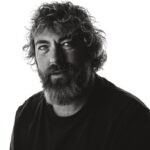
I’ve been taking photographs for a long time, but photography isn’t the only thing that shapes the way I work.
A lot of what happens during a portrait session comes from everything I did before I became a full-time photographer.
Working in financial planning. Interviewing people. Running a business. Volunteering in the community. Photographing events. Spending years talking to people who don’t necessarily enjoy being photographed.
All of that changes the way I approach portrait photography.
So rather than telling you what makes me “better” than another photographer, here are five things that genuinely shape the way I photograph people.
1 – I spent years working in a profession built on trust
Before photography became my full-time work, I was a Chartered Financial Planner.
That might seem completely unrelated to portrait photography, but I don’t think it is.
Financial planning is an incredibly personal job.
People tell you about their money, their families, their ambitions, their fears and sometimes the things they’re most worried about.
You have to listen properly.
You have to communicate clearly.
And you have to create enough trust for someone to feel comfortable being honest with you.
Portrait photography has more in common with that than you might expect.
Most people who come into my studio aren’t professional models. Many arrive saying they hate having their photo taken.
My job isn’t simply to point a camera at them.
It’s to build enough trust that they can relax.
That ability to work with people is every bit as important to me as knowing where to put the lights.
2 – I’ve spent years interviewing people
I’ve recorded somewhere in the region of a thousand podcast episodes over the years.
That has taught me an enormous amount about conversation.
One of the biggest lessons is that people usually become much more interesting when they stop feeling as though they’re performing.
The same thing happens in portrait photography.
If I spend the whole shoot barking instructions at you, asking you to hold unnatural poses and telling you to smile on command, there’s a good chance the photographs will start looking forced.
I’d much rather talk.
I’ll ask questions, make terrible jokes, give you things to think about and occasionally distract you from the fact that there’s a camera pointing at you.
Some of the strongest portraits happen between poses.
A little expression.
A reaction to something I’ve said.
A moment where someone stops thinking about what their face is doing.
That’s often where the real person appears.
3 – I understand why photographs need to do a job
I’ve run businesses for years.
That means I don’t look at commercial photography purely from the perspective of whether an image is technically good.
I’m also thinking about how useful it is.
Where is this photograph going?
Is it for LinkedIn?
Your website?
A press release?
A speaking profile?
Your acting portfolio?
An annual report?
Instagram?
Those uses all need slightly different things.
A beautifully lit photograph isn’t especially valuable if you can’t actually use it.
That affects the way I shoot.
I’ll think about orientation, negative space, crops, different expressions and how a set of photographs will work together.
For personal branding photography, I’m not trying to create one perfect photograph.
I’m trying to give you a useful library.
For event photography, I’m thinking about what the organiser, sponsors and press might actually need afterwards.
For headshots, I’m thinking about whether the photograph feels credible and recognisable.
Photography has to look good.
But it also has to work.
4 – I photograph real people far more often than models
This has probably shaped my approach more than anything else.
I photograph business owners, actors, creatives, charity leaders, professionals, performers, volunteers and people who simply want a decent photograph of themselves.
Most of them don’t arrive knowing how to pose.
They shouldn’t need to.
I’ve never understood the idea that being “photogenic” is some sort of gift that certain people are born with.
A big part of good portrait photography is creating the right conditions.
Lighting matters.
Camera angle matters.
Body position matters.
Expression matters.
But comfort matters too.
If someone feels awkward, rushed or judged, that will usually find its way into the photograph.
So I’m constantly watching what works for the person in front of me.
Some people need lots of direction.
Others need hardly any.
Some people loosen up immediately.
Others need ten or fifteen minutes before we get anywhere near the photograph I know we can make.
That’s completely normal.
My approach changes depending on who’s standing in front of the camera.
5 – I’m interested in people, not just photographs
This is probably the simplest one.
I like people.
I like hearing what they’re working on, what they care about and what brought them into the studio.
That curiosity influences the photographs I make.
It’s also one of the reasons I started The Surrey Hills Portrait, my podcast and portrait project telling the stories of people who live, work and create around the Surrey Hills.
For me, portrait photography isn’t really about faces.
It’s about people.
The person running a business they’ve spent twenty years building.
The actor trying to land their next role.
The creative finally putting their own name behind their work.
The charity founder trying to tell an important story.
The person who hasn’t had a professional photograph taken in fifteen years and is absolutely dreading it.
Those things matter.
Because the more I understand about the person I’m photographing, the better chance I have of making photographs that actually feel like them.
My approach to portrait photography
Of course, technical skill matters.
I care enormously about lighting, lenses, composition and editing.
But I don’t think those things are enough on their own.
A portrait session is a collaboration between two people.
The camera is just the thing recording what happens.
Everything I’ve done before becoming a photographer has shaped the way I approach that interaction.
Listening.
Asking questions.
Building trust.
Understanding business.
Reading people.
And knowing when to stop talking and simply take the photograph.
If you need new headshots, personal branding photography or portraits and you’d like a photoshoot that feels relaxed, collaborative and built around you, I’d love to hear from you.
I’m based in Cranleigh and work with clients across Surrey, West Sussex and Hampshire.
Get in touch and tell me what you need the photographs to do.